
Printed vs Solid Underwear: Does It Change How They Feel?
*All* of the nerdy, behind-the-scenes details from a former Print Designer

Welcome back to Underwear Thesis! I took last week off from pretty much all forms of the internet, so I appreciate you sticking around during some much-needed down time. Today, we’re going Full Fabric Nerd™️!
If you’ve ever pulled on a pair of polka-dotted, floral or day-of-the-week underwear and thought, Huh, these feel…different? You are not imagining it! Printed vs solid underwear can actually feel different on your body—it all comes down to the wild, wonderful world of fabric treatments, dyes and finishes.
One of my former roles was a print designer and product coordinator for women’s intimates. I spent countless hours collaborating with overseas manufacturers and mills learning the ins and outs of achieving soft, printed underwear and pajamas. It’s a complicated ~science~ but important in helping you be an informed consumer!
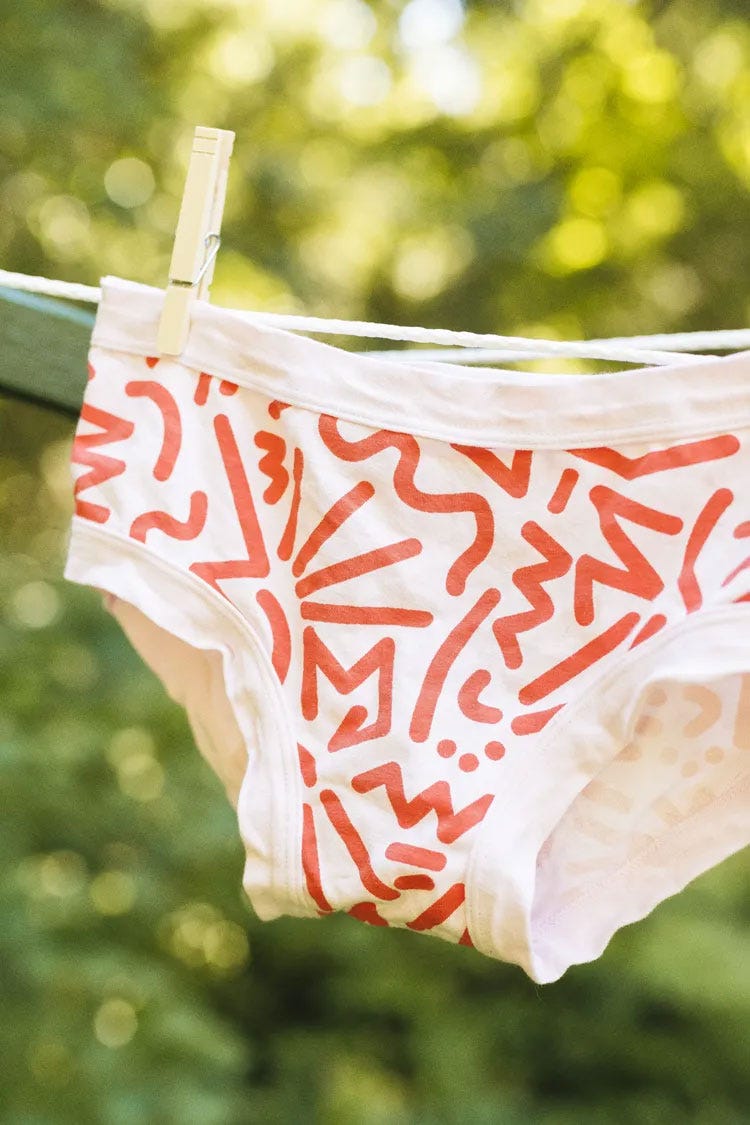
First things first printing vs. dyeing
When you buy a solid color pair of underwear, that fabric is usually piece-dyed—which means the entire fabric was dyed in one uniform shade before being cut and sewn into panties. Solid colors = smooth, even, predictable.
Printed underwear, on the other hand, involves applying designs on top of the fabric, kind of like screen printing a T-shirt, but way more high tech. Depending on the method—rotary screen printing, digital printing or heat transfer—the ink or pigment sits on the surface of the fabric… which the fabric may not feel quite as soft or stretchy as its solid counterpart.
4 of the most common types of printing:
Pigment printing
This method uses pigments (color particles) mixed with a binder that sits right on top of the fabric. It’s basically like painting your undies—the color doesn’t penetrate the fibers, so it can feel a little stiffer or chalky, but it’s cheap and versatile for bold prints.
Heat transfer printing
Designs are printed onto special paper and then heat-pressed onto fabric, kind of like ironing on a decal. It’s great for super detailed or colorful prints, but if done poorly, it can leave the fabric feeling plasticky or less breathable.
Reactive dye printing
Reactive dyes chemically bond with the fabric fibers (especially cotton), meaning the color actually becomes part of the fabric. Think of it like adding color where there was none before. The result? Softer handfeel and better breathability, though prints can fade more quickly after repeated washes.
Discharge printing
This is a subtractive process that starts with fabric that’s already been dyed a solid color. Then, a special chemical “bleach” paste is printed onto the fabric in a design, which literally removes the dye in those areas. Sometimes another dye is added back in at the same time to create a colored print instead of just white.
Discharge printing is like the cousin of batik (parts of the fabric are covered in wax so dye can’t penetrate those areas. When the wax is removed, you’re left with a design made from the untouched fabric color). While both create patterns by controlling where color does or doesn’t go, the methods are opposite: batik blocks dye from getting in, while discharge pulls dye back out.
The result? Discharge prints feel super soft because there’s no extra ink or pigment sitting on top of the fabric. The design is part of the fabric itself, so it keeps stretch and breathability intact. Downside: it only works on darker fabrics and, if the discharge paste isn’t used carefully, prints can look fuzzy or uneven.
Stretch factor: why your printed panties sometimes feel stiff
Here’s where it gets realllly nerdy: stretch fabrics like cotton/elastane blends rely on those elastic fibers being able to move freely. When you print on fabric, some inks and pigments can create a slightly stiffer layer on the surface, limiting stretch and recovery. So while your solid cotton briefs might hug your body juuust right, the exact same pair in a floral print might feel a teensy bit tighter—or not snap back as well after a long day.
Not a dealbreaker, but it explains why your favorite cut sometimes fits differently depending on the print.
Handfeel (aka fabric personality)
“Handfeel” is a fancy textile industry way of saying what the fabric feels like when you touch it. Smooth, soft, silky, crisp—these are all handfeel descriptors. And here’s the thing: printing can change handfee.
Pigment prints can make fabric feel chalky or dry.
Reactive dye prints usually sink into the fibers, so they feel softer, but can fade faster with washing.
Heat transfer prints can sometimes feel plasticky if not done well.
So if your printed underwear feels a little rougher than your solids, it’s not in your head—it’s ~science~.
Washes & finishes:
Manufacturers often add washes to printed fabrics to soften them up or give them a “broken-in” handfeel. Some of the more popular types are enzyme washes, silicone washes or even stone washing (yep, for underwear fabric, too). These treatments break down fibers slightly so they feel softer against your skin.
But beware: too much washing treatment = less durability. It’s a balancing act. The softer your printed undies feel fresh out of the package, the more you might notice them aging faster because the fibers were broken down to begin with.
So…should you avoid printed underwear?
Not at all! Prints are fun. Life is too short to wear only white briefs. Just know that:
Solids will usually feel softer and stretchier right away.
Prints might need a wash or two to break in.
Handfeel and fit can vary depending on the printing method.
My advice? Mix it up. Have your comfy solids for everyday wear and save the cute prints for when you want to feel spicy—even if they’re a smidge stiffer.
The bottom line (pun very much intended)
Fabric science is W I L D. What looks like a simple choice between a floral print or plain navy is actually a whole cascade of textile chemistry. So next time you’re standing in the underwear aisle wondering why the printed pair feels just a little different, you’ll know—it’s not you, it’s the fabric. And then you can make your choice accordingly!
Leave a comment with any questions you have on this topic and what you think of these more science-y type posts! And stay tuned—lots more brand reviews coming!